For decades, simulations have helped manufacturing engineers improve product performance in every kind of scenario, environment, and use case. However, valuable performance data came at a high cost in both time and money: simulations require physical build-outs, not to mention labor to conduct tests and analyze results. These limits didn’t just make it hard to compete — it held back progress for the entire manufacturing industry.
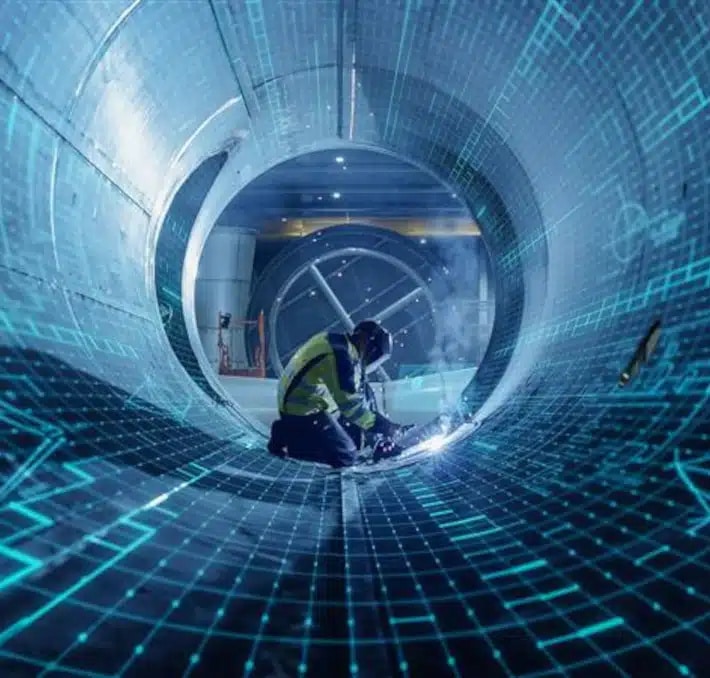
Now, engineers can build and run completely digital simulations with real-world accuracy, in a fraction of the time and cost of traditional sims. In fact, the software has recently become so advanced that users can create what’s known as “digital twins” that perfectly mirror even the most complex hydraulic systems and fluid engineering projects. What exactly is this technology capable of, and how can it help fluid handling equipment manufacturers? Let’s dive in.
There are four primary types of digital twins:
You Can’t Scale AI on Ambition Alone.
Digital twin software can have a major impact on fluid handling equipment manufacturers trying to innovate their products and improve profit margins. Here’s how:
Digital twins can help users quickly identify the shortcomings and potentials of any product, both from engineer observation and machine learning analysis. Before a product even enters production, modelers can simulate potential conditions in the field and get insight into likely performance outcomes. Engineers can use this data to make product refinements without the need to build physical prototypes.
Digital twins can help inform manufacturers how to improve every aspect of a product, from its inception all the way to its retirement from the market. Simulations can expose mechanical risks and help modelers develop a recommended maintenance schedule. Modelers can even simulate end-of-life processes to streamline product disposal, recycling, and material harvesting.
As development timelines become more demanding, and materials become more expensive, physical prototyping and research is a luxury many fluid handling equipment manufacturers can no longer afford. Digital twin software allows manufacturers to simulate operations and gather performance data in a fraction of the cost and time as traditional methods, and often with greater insight.